Proxmox networking - part 3
A follow up to part 1 and 2 Networking is key to success in HomeLabbing and Proxmox has it all switches and bridges in many forms. This is some of them. Planning


And now we will set up the Local Area Network - on paper
Two-way of implementing networking
Doing while going or plan - document -implement process. You will get it to work, the questions is for how long.
The doing while going method.

The doing while going method. Quick to get started but terrible in the long run. Many years ago, a major bank needed to rebuild their data-center. One reason was that no more cables fitted under the floor. Truck loads of old mainframe cable (some as expensive as a mid-sized car, each) were taken to the land fill.
Plan-Document-Implement process - stay in control

It shall and must be easy and fast to find a certain cable to pull or plug. Plugging/pulling the wrong one creates a hassle, and plugging it wrongly makes a big mess. Even after years or by a kid.
Just spent 2 days cleaning up one of those, no labels, cables plugged at one end but not the other - a total mess. One cable plugged wrongly and half of the net was out! Now cables are color coded and labeled.
Planning and Documentation is 80%
The most important is to plan in detail and document everything, then label all cables and devices. There are many ways to skin the cat. You choose your way of doing it. I will give some examples, and also we will talk about the apps we can run on our system.
Forty years ago everything was more or less on paper and data-centers had some fancy wall size drawings showing the cabling.
Twenty years ago we used Excel and PowerPoint and some bigger companies had dedicated systems for it.
Today, we have a multitude of apps and systems to choose from.
Implementation 20%
Making labels can be done by hand or printed - your choice.
Cables can be found in any color today, so use colors, I do.
Already 30 years ago, some modem/routers came with yellow/red or blue cables. This was the time when all network cables generally were gray. You instantly knew that cable is special.
Get started
I usually sketch my ideas in my notebook and then transfer to some of the systems I will discuss later in this article.
Planning
The fun starts with an idea or a need. We need to imaging was of implementing it. Sometimes we need to focus on cost, speed, security or each-of-implementation.
Pencil on paper
The old pencil and paper method is fantastic in the early stages. I have a whit-board by my desk to draw my sketches and work on them. For more complicated system, I use the Post-It and cord-method.
Digital pencil
Today, we have a number of tools to draw, and we can replace pencil and paper in the office. One fantastic tool is draw.io link (from $15/month) now also known as diagrams.net link. Diagrams.net is free to run on the net and easy to set up on your Proxmox system. It's been my favorite for years. You can design anything, and you can make interactive diagrams with live links to machines and services.
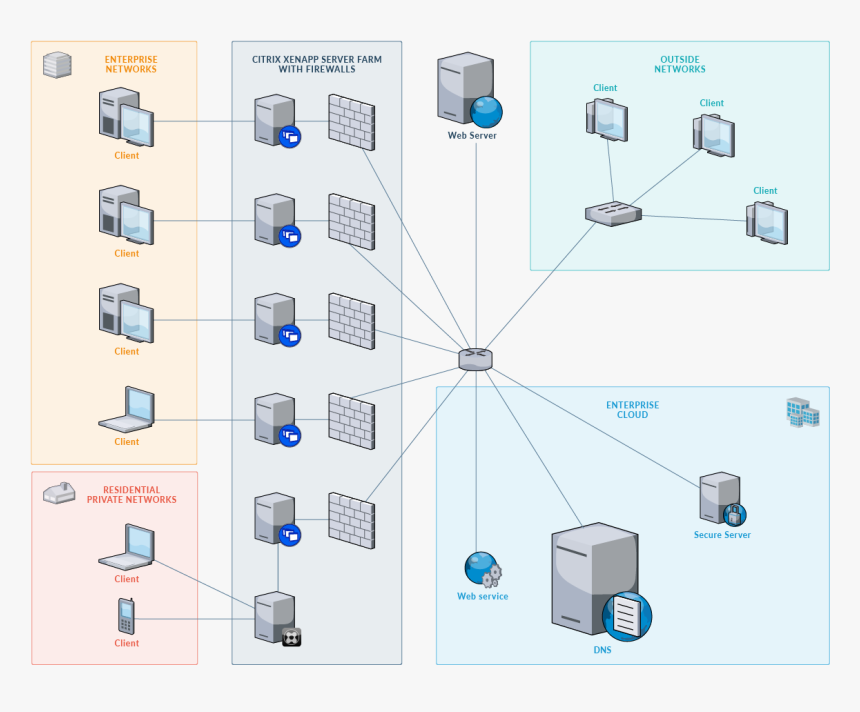
You can design racks and networks as well as offices and organizations, or mind maps and flowcharts. It's the Swiss knife of our design tool set.
Documentation - Inventory as a design starting point
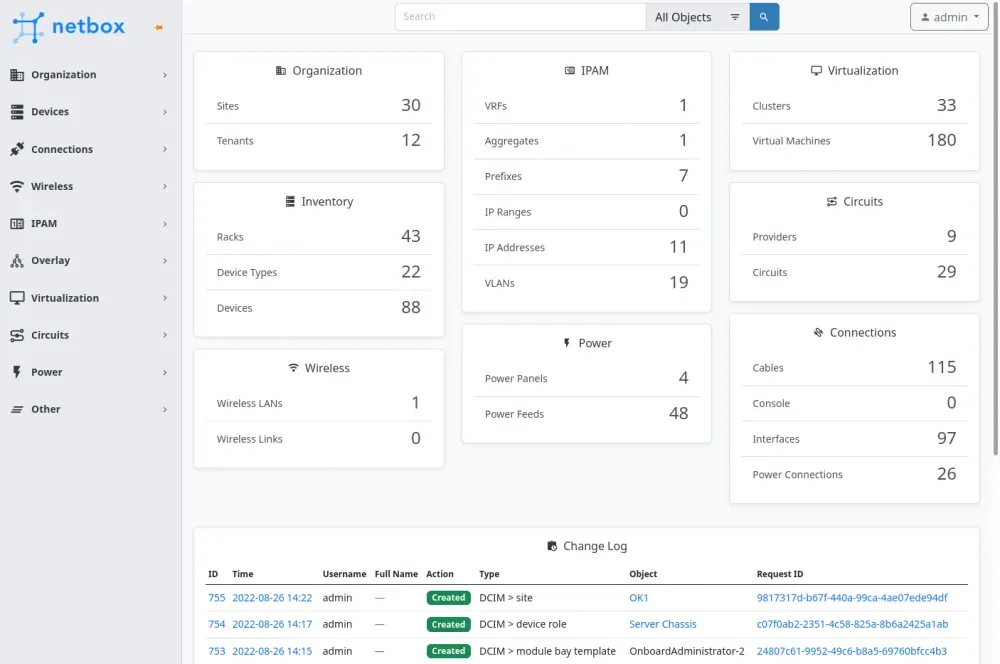
Netbox is a superb tool for designing your network, and it will function as the inventory system after implementation. We can run it on our server. By nature, it's an enterprise tool, but it's good for Home Labs. It also does IPAM.
Other solutions
It's not what you use, it's all about that you do.
You can use pen and paper, excel/calc, word/write and any other general purpose program. The key is to PLAN and DOCUMENT.
Time spent at this stage is time saved.
Implementation
Making labels can be done by hand or printed - your choice. I use a label printer connected to my Mac, Windows or Linux PC from Seiko, but Epson and Brother makes all kinds of label printers. A connected printer is nice to have. You can easily print all labels by your desk and then take the roll to the switch and do the labeling in one go. I also use a Dymo printer for some equipment and cables, a handheld manual one for field work.
I will cover setting-up the switches and configure the Firewall and Proxmox networks and system resources in an other series of articles.
Overriding network device names
When upgrading kernels, adding PCIe devices or updating your BIOS, automatically generated network interface names may change. To alleviate this issues, Proxmox Backup Server provides a tool for automatically generating systemd .link files for overriding the name of network devices. It also automatically replaces the occurrences of the old interface name in /etc/network/interfaces.
The generated link files are stored in /usr/local/lib/systemd/network. For the interfaces file, a new file will be generated in the same place with a .new suffix. This way, you can inspect the changes made to the configuration by using diff (or another diff viewer of your choice): diff -y /etc/network/interfaces /etc/network/interfaces.new
If you see any problematic changes or want to revert the changes made by the pinning tool before rebooting, simply delete all .new files and the respective link files from /usr/local/lib/systemd/network.
The following command will generate a .link file for all physical network interfaces that do not yet have a .link file, and update selected Proxmox VE configuration files (see above). The generated names will use the default prefix nic, so the resulting interface names will be nic1, nic2, ...
proxmox-network-interface-pinning generateYou can override the default prefix with the --prefix flag:
proxmox-network-interface-pinning generate --prefix myprefixIt is also possible to pin only a specific interface:
proxmox-network-interface-pinning generate --interface enp1s0When pinning a specific interface, you can specify the exact name that the interface should be pinned to:
proxmox-network-interface-pinning generate --interface enp1s0 --target-name if42In order to apply the changes made by proxmox-network-interface-pinning to the network configuration, the host needs to be rebooted.


